
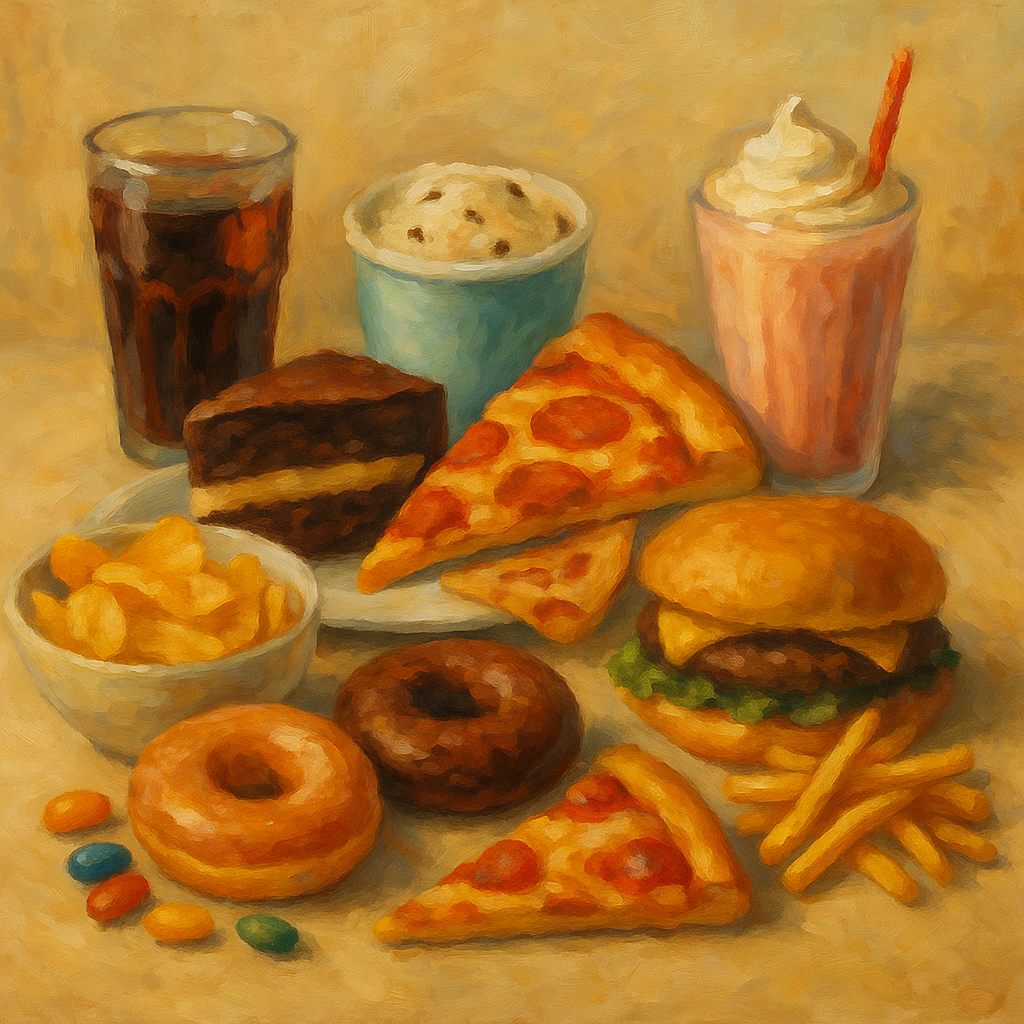
Our “Trigger” or “Binge” Foods
Choosing Specific Foods to Refrain from…
We believe that the body and mind of a compulsive eater react differently to food than the body and mind of a normal eater. We find it best to list all the foods, ingredients, and behaviors that cause problems for us and then remove them from our food plan. We urge you to be honest and not continue eating certain foods or practicing certain behaviors simply because you can’t imagine ever living without them. Those may be precisely the things that should be on your list.
Below are examples of foods and eating behaviors that some members have identified as causing intense cravings or lack of control.
Trigger or binge foods are foods we eat in excessive quantities or to the exclusion of other foods; foods we hoard or hide from others; foods we eat secretly; foods we turn to in times of celebration, sorrow, or boredom; foods that are high in calories and low in nutritional value; or foods we simply cannot stop eating once we start.
In addition, we look to see whether there are any common ingredients among these foods—such as sugar, white flour, or excess fat—that may create the “phenomenon of craving” (Alcoholics Anonymous, 4th ed., p. xxviii) in our bodies and, thus, are a trigger for us.
Each of us may have problems with different foods or ingredients. If a food has been our binge food in the past or if it contains ingredients that have been in our binge foods, we remove it from our plan. For example, if pasta is a trigger food, then other foods made with flour (breads, muffins, crackers) could cause problems. Even extra servings of a non-trigger food might create cravings. If we are unsure whether a food causes problems for us, we leave it out at first. Later, with abstinence, we find that the correct answer becomes clear to us. The practice of the Twelve Steps will, with time, relieve us of the desire to eat those foods or to repeat those eating behaviors. When we think of this process not as deprivation but as a positive act and an ongoing spiritual discipline, we begin to find freedom.
Here are some examples of potentially problematic foods:
- comfort foods or junk foods (such as chocolate, name-brand fast foods, cookies, potato chips)
- foods containing sugar or sugar substitutes (such as desserts, sweetened drink products, cereals, many processed meats, many condiments)
- foods containing fats (such as butter and other high-fat dairy or non-dairy foods, deep-fried foods and snacks, many desserts)
- foods containing wheat, flour, or refined carbohydrates in general (such as pastries, certain pastas, breads)
- foods containing mixtures of sugar and fat or sugar, flour, and fat (such as ice cream, doughnuts, cakes, pies)
- foods we eat in large quantities even though they aren’t our trigger foods
- foods labeled “diet,” “sugar free,” “no sugar added,” “low-fat,” and/or “low calorie”
- ethnic or cultural foods
- foods with specific textures and/or flavors (such as creamy, crunchy, chewy, juicy, sticky, oily, salty, doughy)
When we identify the foods and food ingredients that cause us to crave more food, we stop eating them.

_____________________________________________________________________
© Overeaters Anonymous, Inc. All rights reserved.
Image Source: CC0 License – AI Generated Image